Showing posts with label IPS. Show all posts

Tuesday, November 10, 2009

Swine Flu Deja Vu

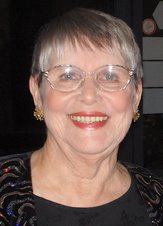
Margie Bernard

“There is no evidence that any influenza vaccine thus far developed is effective in preventing or mitigating any attack of influenza. The producers of these vaccines know that they are worthless, but they go on selling them anyway.” Dr. J. Anthony Morris (formerly Chief Vaccine Control Officer at the Federal Drug Agency at the Department of Health and Human Services, Washington, DC, 1976)

I met Dr. Anthony (Tony) Morris during the autumn of 1977, when he made an appointment for a consult at the Government Accountability Project (GAP), Washington, DC. GAP was a project initiated by Ralph Stavins, a Fellow at the Institute for Policy Studies (IPS). Stavins had hired me as GAP’s first Director in October 1977, and I was charged with setting up the first conference on Whistleblowing in National Security Agencies to be held May 19-20, 1978.

Morris had come to GAP seeking assurance of our continued support in his attempt to overturn his dismissal as Chief Vaccine Control Officer at the United States Food and Drug Administration of the then Department of Health, Education and Welfare (now the Department of Health and Human Services). GAP agreed to champion his legal battle against FDA by publicizing his case and making available the film made about this matter, The Swine Flu Caper, directed by Saul Landau, another IPS Fellow.

Nearly two-years before, the US public had been warned that a likely Swine Flu (New Jersey H1N1), pandemic was on the 1976-77 horizons. At that time, the major pharmaceutical companies raced to develop a vaccine to counter its presumed devastation. Once a vaccine was approved for use by the FDA, President Gerald Ford had his inoculation witnessed via major-time television news as encouragement for others to do the same. Based on his research Morris disagreed with the rush to vaccinate the masses.

Dr. Morris had long been a critic of all flu vaccine. Based on test results obtained in his laboratory research, he had cautioned his colleagues at the Agency that in his expert opinion these inoculations were a major factor in triggering various neurologic illnesses ranging from GBS (Guillain-Barre Syndrome) (1) to encephalitis to paralysis and in some instances death. In the case of the new Swine Flu serum, Morris felt that aside from his usual misgivings about flu vaccines in general, he felt there had not been adequate testing undertaken to justify its use in this instance. Interestingly Morris had one unlikely ally—the Federal Insurance Company. This principal underwriter for pharmaceutical companies refused coverage to the four manufacturers of the swine flu serum stating: ‘it was not convinced that there has been time enough to test the vaccine for side effects’. (2)

Furthermore, there was general speculation as to whether there was such a disease as Swine Flu. And, if there were, did the proposed deterrent present a greater danger to the public than the illness itself? When Dr. Morris reported his professional concerns about this particular serum to FDA hierarchy they were ignored. Then in the interest of public safety he went public with the information in a July 1976 article in the Washington Post. He was then summarily fired for ‘insubordination and inefficiency’ by FDA Commissioner Alexander Schmidt and government agents entered his lab, killed all the animals used in his vaccine research and confiscated all his and his lab assistants’ research papers.

At the end of the day there was no Swine Flu epidemic in 1976 and the vaccination program was ended ten-weeks after it was initiated due to increased concern as to its safety.

The current observation is that we face another potential Swine Flu (2009 H1N1 virus), pandemic and although such observation may be political/social fact, ‘whether it becomes a scientific fact and a policy fact is yet to be seen’. (3) As to the speculation of a new pandemic, MSNBC has reported:

The Center for Disease Control has found that rapid tests to diagnose the “swine flu” can be wrong as much as nine times out of ten. The “best” test was wrong half the time, the CDC found. The government study indicating that rapid tests to diagnose the “swine flu” could hardly distinguish between the “swine flu” and normal seasonal flu gives support to those medical experts who say the “swine flu” is a harmless, ordinary flu that is being hyped by the WHO and the vaccine companies to justify a pandemic level 6 declaration and mass forced vaccinations. (4)

In the past, health care workers had a choice whether or not to get inoculated against flu—whether the annual seasonal virus or a unique variation. This year, however, many medical centers, hospitals and clinics are mandating their personnel to be inoculated or face disciplinary action. This has raised concerns among health care professionals themselves as well as their unions and professional associations. During the annual flu season, only about one-half of health-care workers get the shot. As one clerical worker in Washington Hospital Center stated, “I don’t think I should be forced to take something I don’t want to take”. And, in Great Britain, a survey of 1,500 nurses disclosed that one-third would not get the vaccine due to safety concerns. (5)

During the 1976 Swine Flu scare, numerous law suits were filed by people alleging they had suffered various side effects as a direct result of being inoculated. Several of these litigations were successful and large payouts were made by the pharmaceutical companies and the US government as settlement. This month, September 2009, Secretary of Health and Human Services Kathleen Sebelius signed a document that grants legal immunity to federal officials and the vaccine producers from similar claims.

As for myself, I plan to follow Tony’s 1976 advice and forgo the Swine Flu shot this year but will get the seasonal flu jab just as I have in years past as this serum has been through more rigorous testing prior to its release.

And what happened to Morris’s efforts to overturn his 1976 FDA dismissal? After a seven-year legal battle, James S. Turner’s tireless defense of Morris successfully proved that all FDA charges against Morris were false.

NOTE: These are my citations, however, the referant numbers have been somehow eliminated in this cut-n-paste version so I've added them thus (n).

(1) There were reports of GBS affecting some people who had received swine flu immunizations in the 1976 U.S. outbreak of swine flu. Overall, there were about 500 cases of GBS—25 of which resulted in death from severe pulmonary complications— which, according to Dr. P. Haber, were probably caused by an immunopathological reaction to the 1976 swine flu vaccine. Haber P, Sejvar J, Mikaeloff Y, Destefano F (2009). Vaccines and Guillain-Barre Syndrome.
(2) Business Insurance, May 1976
(3) Spencer, D., Millar J.D., Reflections on the 1976 Swine Flu Vaccination Program. Emerging Infectious Diseases, Center for Disease Control, Vol. 12, No. 1, January 2006
(4) An Interesting Article on the Swine Flu. The Flu Review, http://theflureview.com/an-interesting-article-on-the-swine-flu/ January 29, 2009.
(5) Mandatory Flu Shots Hit Resistance, Rob Stein, The Washington Post, September 25, 2009
Thursday, December 07, 2006

Transforming Arts: Transcending Beliefs

A Personal Summation
Margie Bernard

The YouCAN conference, Transforming Arts: Transforming Beliefs, was a joint international conference of Boomerang Theatre in Cork and The Playhouse in Derry held in Monaghan on 1-3 November 2006. For me, the event was an artistic and intellectual feast of concepts and practices that enriched my spiritual/activist soul. In my summation, I have taken the liberty of changing its title, as I don’t believe we should be about the business of ‘transforming beliefs’ but rather coming to transcend our beliefs to open ourselves to exploring our differences so we can begin the process of healing and reconciliation.

This conference enhanced my understanding of what is community art and how its expression and execution differ from that of traditional fine art. A difference, I felt, that was highlighted in the opening talk by Mark Patrick Hederman and the final presentations on Thursday by Claudia Bernardi. For me they summed up the schism between egocentric individual art and ego-free collaborative art.

I would agree with Mark Patrick Hederman, an Irish Benedictine monk, that art can be propaganda and entertainment as well as a means of excavation and exploration. He theorizes that we are urgently in need of new symbols to explore the ethical contradictions we face in the 21st Century. In this regard he feels the arts present one means of expressing our confusion and furthering our search for meaning.

Where he and I may differ is in the realm of what constitutes ‘good’ art and what criteria are used in this determination. Long dominated by European male artists and their wealthy patrons who financed its execution, the definition of what is artistic has been undergoing tremendous change as we rediscover the long neglected artistic expression of women and cultures other than those of a western European perspective. There has been a huge transition from seeing art as only individual expression, to that of appreciating folk art, to the current ephemeral expression of community art that is as much about process as product. (There has been a long-standing understanding within feminist circles that numerous works attributed to ‘anon.’ are actually artwork by women that was denied recognition.)

The elite fine arts’ world has long determined what is ‘acceptable’ art whereas community art is seeking recognition and appreciation by a wider audience. Too long have the arts been jailed in marble lined halls where the masses either fear to tread or are not welcomed. Defined by Wikipedia, community art:
Also known as "dialogical art" or "community-based art," is an art form based in a community setting. Artworks from this genre can be characterized by interaction and/or dialogue. The term was defined in the late-1960s and spawned a movement which grew in the United States, Canada, UK, Ireland and Australia. Often the work is based in deprived areas and covers all the art forms, but with a community oriented, grassroots approach.

The presentation of Oraib Toukan, a Palestinian living in Jordan, gave recognition to the fact that an artist can use visual art as a means to convey both the communities’ as well as the individual’s expression of a shared experience. She posed the question of what should be the role of the artist in a conflict situation. Her statement, ‘remind me to remember to forget’, poses a conundrum on which I can gnaw and attempt to unravel.

Oraib demonstrated how the use of the crossed ribbon could be a means to give visual promotion of an entrenched political view as well as give expression of social change visionaries. (And, if memory serves me right, the first group to use a crossed red ribbon was the gay/lesbian movement to signify those who were opposed to homophobia attitudes and was also linked to AIDS prevention awareness.)

Julie Jarvis, a Canadian, demonstrated the need for the individual artist to suspend ego when engaged in collective artistic expression. She illustrated that the collective vision is more important than the personal when using art as a healing mechanism in a rehabilitation context. She also highlighted the importance of using recognizable icons that convey traditional folk images, i.e., the image of the crow as a source of wisdom and knowledge. Her presentation also highlighted the meaningful role the arts can play in educating the community on the link between one’s ecological environment and physical/spiritual healing–a quest for well-being which is both cross-cultural and universal.

Claudia Bernardi, a self-exiled Argentinean, presented the concept that art provides a new paradigm for social interaction. The collective work she and the community in El Mazote, El Salvador, have been engaged in demonstrates that collective community art can give expression to traumatic events that our psyche would rather suppress: that community artistic expression can be a means of enabling collective healing while also providing expectations for a better future. Like Julie, she affirmed how vital is ego-suppression of the artist when seeking to awaken other individuals, and the collective, to the awareness that we all have the ability to give artistic expression to emotion, be that emotion negative or positive.

The process that Claudia and the El Mazote community engaged in, also demonstrated the vital importance patience plays in an attempt to gather all viewpoints of all individuals in a community in order to give collective expression and execution of, an end product–in this case a memorial mural of vibrant rainbow colors sanctifying the 384 genocidal deaths of the women and children at the site of their mass grave.

Roberto Varea, who fled his native Argentina during its ‘dirty war’, demonstrated the need to document the silent voices of the immigrant, in this case the plight of the undocumented in search of work, who cross the border from Mexico to the US (much of which at one time formed parts of their ancestral homeland). In the case of California, where Roberto is currently based and I once lived, without the underpaid neo-slave labor of the undocumented workers, the seasonal produce of the Central Valley fields of plenty would rot; the hi-tech offices in Silicon Valley and Hollywood would not be nightly cleaned; the garbage on the streets and refuse from residences would not be collected.1

Himself an immigrant, Roberto talked about being the ‘other’ whether living in the US or when visiting his native land. And, although light complected, he is regarded as a person of color in California. In the US he has joined other hyphenated residents who live a schizophrenic existence with regard to their citizenship. But as Roberto reminded me he may be the other but the other is part of me–one more conundrum for me to ponder.

Roberto emphasized that community art resides at the demarcation point of transition from the old to the new. It gives voice to those who are seeking economic change and social justice. Community art provides a means of giving this yearning a voice that expresses the underlying unrest with the status quo. Community art also provides a means of nonviolent resistance to social injustice.

Regarding religious belief, Roberto commented that for the Latino's of Central and South America, the Catholic Church has been regarded as one segment of European colonization and foreign occupation. However, in the US, among both documented and undocumented immigrants from these same countries, the Church provides both religious solace and communal sustenance to those in cross-cultural limbo. An attempt to provide a voice for the voiceless in Central and South America was contained within the Liberation Theology movement led by Bishop Romero who was assassinated for implementing it and Pope, Benedict XVI, a.k.a. Joseph Ratzinger, bears responsibility for its suppression. However, on an informal level, liberation theology lives on in the actions of individual community-based priests and nuns.2

In a one-on-one conversation between Claudia, Roberto and myself, we discussed how difficult it is for those who are multi-language to convey thoughts and concepts with a universal voice. I, hindered with only English, find difficulty enough expressing myself in just the one language so don’t know how I would cope with finding meaning within two or more. However, as Roberto pointed out in his talk, a new dialect is emerging in the USA, ‘Spanglish’ which is providing minor linkages of communal expression between the two languages–Spanish and English. This was also the case with earlier Jewish Yiddish language immigrants. In both cases, Yiddish and Spanglish have enhanced the English language. Certainly I give evidence of both in my own use of language along with recently acquired words of Irish garnered while living here during the past six years.

In his presentation, Phil Mullen, an Irish community musician based in London, reminded us that given the right circumstances we also could become the person who justifies inhumane acts with the words, ‘I was only following orders’. This was aptly demonstrated by the experiment in which a subject suspended their moral conscience when ordered to do so by someone they perceived to be an ‘authority figure’. Furthermore, there are no innocent bystanders: we also aid and abet injustice when, in the words of Mumia Abu-Jamal, “ . . . a cause comes along and you know in your bones that it is just, yet refuse to defend it–at that moment you begin to die. And I have never seen so many corpses walking around talking about justice."

Or, as that perceptive cartoon character Pogo remarked, We have met the enemy and it is us. Or as Roberto reminds me, the evil I abhor in others also resides in me. All that it takes for this diabolical other to emerge is fear–fear of the unknown, fear of the other. However, as former U.S. President Franklin D. Roosevelt once stated, ‘The only thing we have to fear is fear itself’, a useful daily mantra in this age of fearful uncertainty.

Having attempted to give some personal meaning to the various ideas expressed during this conference, for me they boil down to the importance of the arts to provide a method to explore our shared similarities rather than our differences. Perhaps community art practitioners, working in a tandem with grassroots communities, will provide one means to further understanding between peoples and make accessible to us all the riches contained within our various cultures.


1 On a personal note: The plight of migrant field workers has long been a major concern of mine stemming from my Michigan childhood where I and my family competed with migrant stream of workers (mainly displaced southern whites) who annually made their way north from Belle Grade, Florida to harvest crops.

To my pre-teen eyes these families seemed to live an exotic nomadic existence that belied the backbreaking, sweat-producing labor engaged in by my family and me to supplement our poverty-level existence. These migrant southern workers also helped form my first prejudice that was to regard any white with a Southern US accent as ignorant (a prejudice of which I still harbor vestiges). In an attempt to examine this prejudice, my first political essay was to document the plight of these migrant workers and later to support the efforts of Caesar Chavez in the 1960s, to form the United Farm Workers Union in California.

It was during this latter period that I was exposed to El Teatro Campesino (The Farm Workers Theater) begun by Louis Valdez. He devised a political drama that highlighted the plight of the undocumented Mexican workers in California. The play was staged on the back of a flatbed truck that traveled around California serving as a means to educate the general public about the inhuman working conditions of these field workers. Valdez’s drama was my first exposure to the positive impact of community art on the general public.

This was heightened years later in Washington, DC where Chilean exile friends of mine, José and Francisco (Pancho) Letelier, painted political murals satirizing racism and prejudice on the sides of buildings in the interracial Adams-Morgan neighborhood where I resided.

José and Francisco were exiled when their parents, emigrated from Chile after the coup that displaced the elected socialist government of Salvadore Allende. Because he continued to speak out, their father, Orlando, was murdered, along with a college Ronnie Moffitt, when the car they were in was blown up in September 1976, in front of the Irish Embassy in Washington, DC. Orlando’s assassination was carried out under orders of the coup leader Augusto Pinochet. Ronnie was an innocent victim; her husband, Michael Moffitt, survived the blast. Today, Pinochet is under house arrest in Chile, where he is awaiting trial for the crimes he ordered in Chile following the coup that covertly aided by the US government.

In memory of Orlando and Ronnie, the Institute for Policy Studies in Washington, DC, where Orlando was a Fellow and Ronnie his associate (and I, later, an Associate Fellow), has established an annual Letelier-Moffitt Human Rights Award. Orlando and Isabel Letelier’s eldest son, Juan Pablo is currently a Senator in the Chilean Legislature. In Chile, 11 September is remembered as the day of the 1972 ‘Coup of the Generals’ that resulted in the assassination of Allende and brought Pinochet to power

2 Today both the Catholic and mainstream Protestant Churches in Central and South America are being supplanted by US based fundamentalist ‘born-again’ Christians who use community art as one means to infiltrate communities and entice adherents. They arrive in deprived communities armed with balloons in one hand and the New Testament in the other in their quest to convert people to take Jesus as their savior.